Breath of Life for Kashmir’s Children
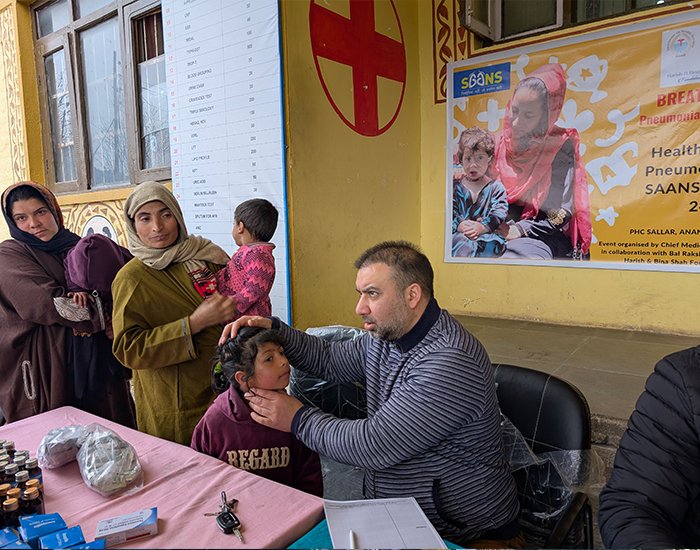
Coordinated effort through strengthened frontline health systems and community outreach has improved early detection and timely care for childhood pneumonia, thus contributing to better child health outcomes in high-burden districts of Jammu & Kashmir.
Bal Raksha Bharat (BRB), with the support of the Directorate of Health Services, Kashmir, and National Health Mission Jammu & Kashmir, and funding support from Harish and Bina Shah Foundation, is implementing Project Breath of Life to strengthen pneumonia prevention and management among children under five.
Pneumonia remains one of the leading causes of under-five mortality in India, accounting for a significant proportion of preventable child deaths despite the availability of effective and low-cost interventions. In Jammu & Kashmir, the burden is particularly concerning. As per NFHS-5, the prevalence of pneumonia among children under five stands at 3.9%, significantly higher than the national average of 2.8%, positioning the region among the top five high-burden states in the country. Baseline assessments in the project’s target intervention areas revealed an even sharper challenge, with pneumonia prevalence reaching 10.8%. District-level analysis further identified Kupwara (8.6%), Anantnag (8.0%), and Rajouri (6.0%) as critical hotspots requiring focused and sustained intervention.
Under this project, BRB is currently working across 8 districts, directly reaching 79866 children under five. Our support so far has contributed to improved early identification of pneumonia cases, enhanced referral linkages, and strengthened treatment practices at both facility and community levels.
The project is anchored in two core approaches:
- Health system strengthening, focused on building the capacity of healthcare providers, improving standard treatment protocols, and strengthening district-level training systems.
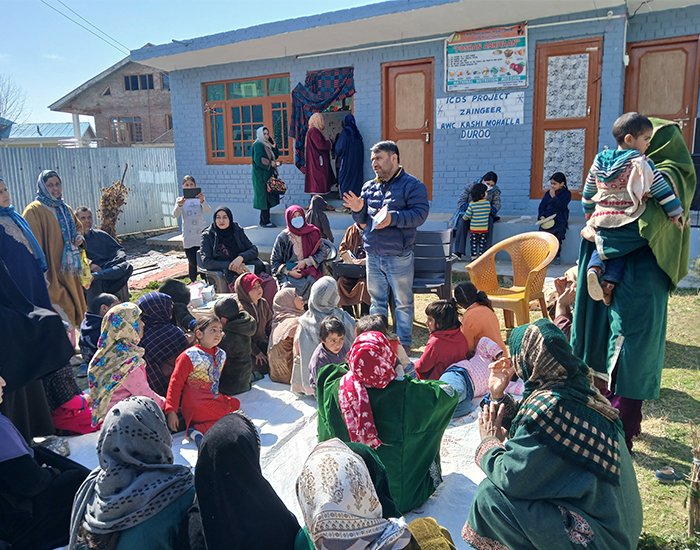
- Community engagement, aimed at increasing caregiver awareness, improving care-seeking behavior, and strengthening frontline worker outreach at the household level.
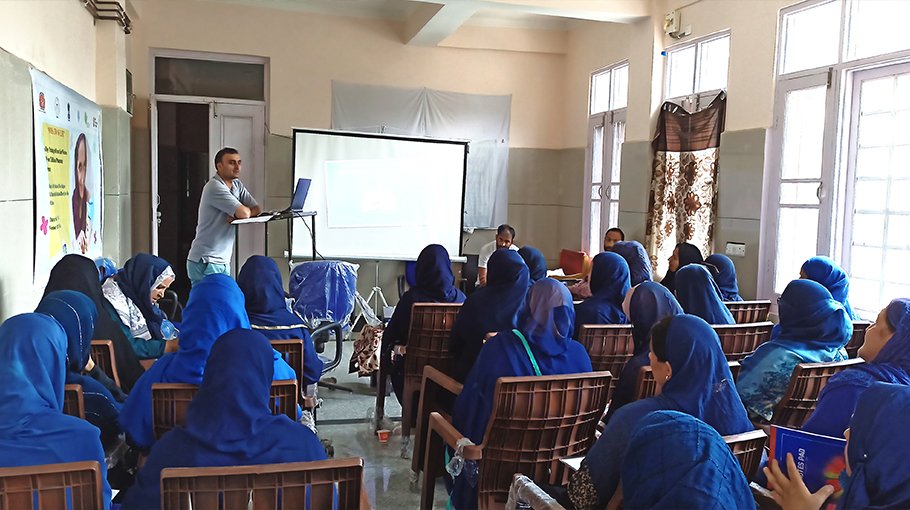
Key innovations under the project include the establishment of a Pneumonia Skill Lab, which has enabled hands-on training for over 2000 healthcare providers in Kashmir division on early identification and standardized management of pneumonia cases. In addition, the use of the Social Behaviour Change Communication (SBCC) digital tool has supported frontline workers in structured home visits, real-time case tracking, and timely caregiver counselling—strengthening continuity of care from facility to community.
Building on the demonstrated impact and strong government partnership, BRB aims to scale up this initiative across all districts of the Kashmir region and extend it to Leh in the coming phase, contributing to sustained reductions in preventable child deaths and stronger child health systems at scale.